- ERP-System
Implementing or replacing an ERP system is one of the riskiest IT projects a mid-sized company can undertake. Budget overruns, missed timelines, and difficult rollouts are common, usually not because of the technology, but due to unclear requirements, lack of methodology, and insufficient internal governance. ERP consulting is designed to reduce exactly these risks.
Yet “ERP consulting” is a vague term: it ranges from independent selection advisors to implementation partners tied to a specific system. Anyone buying consulting services should know which service they actually need. This article clarifies what ERP consulting concretely covers, how to recognize quality consulting, how much internal effort it requires, and which selection criteria truly matter.
Key Takeaways at a Glance
- ERP consulting covers two clearly distinct roles: independent selection consulting and system-specific implementation consulting
- Quality consulting is recognizable by its process focus, transparent methodology during the selection phase, and full cost transparency
- ERP consulting does not replace internal accountability — companies should plan for significant internal effort covering key users, data cleansing, testing, and decision-making
- System selection should be based on weighted criteria, not feature checklists or product demos
- Cloud-based ERP solutions can reduce entry barriers, maintenance overhead, and scalability challenges for mid-sized businesses
What Is ERP Consulting and What Role Does It Play in an ERP Implementation?
ERP consulting is the professional guidance of companies throughout the selection, implementation, and optimization of an ERP system. It acts as a translator between the business requirements of individual departments and the technical realization within the system.
A distinction that often gets blurred in practice is critical: ERP consulting appears in two fundamentally different roles. Independent selection consulting is vendor-neutral and helps identify the right system in the first place. Implementation consulting is tied to a specific product and handles the technical rollout. Both are legitimate — but they serve different interests. An implementation partner will naturally tend to recommend the solution they specialize in.
For companies, this means: during the selection phase, independence is valuable; during execution, deep product expertise matters. Some consultancies cover both separately; others specialize in one.
Consultant or Implementation Partner — What Is the Difference?
This question determines both selection quality and cost. An independent ERP consultant earns nothing from the software and evaluates systems purely on fit. Their value lies in neutral selection and requirements definition. An implementation partner, by contrast, knows their system in depth and can make it work in production — but is not a neutral advisor on whether that system is the right choice.
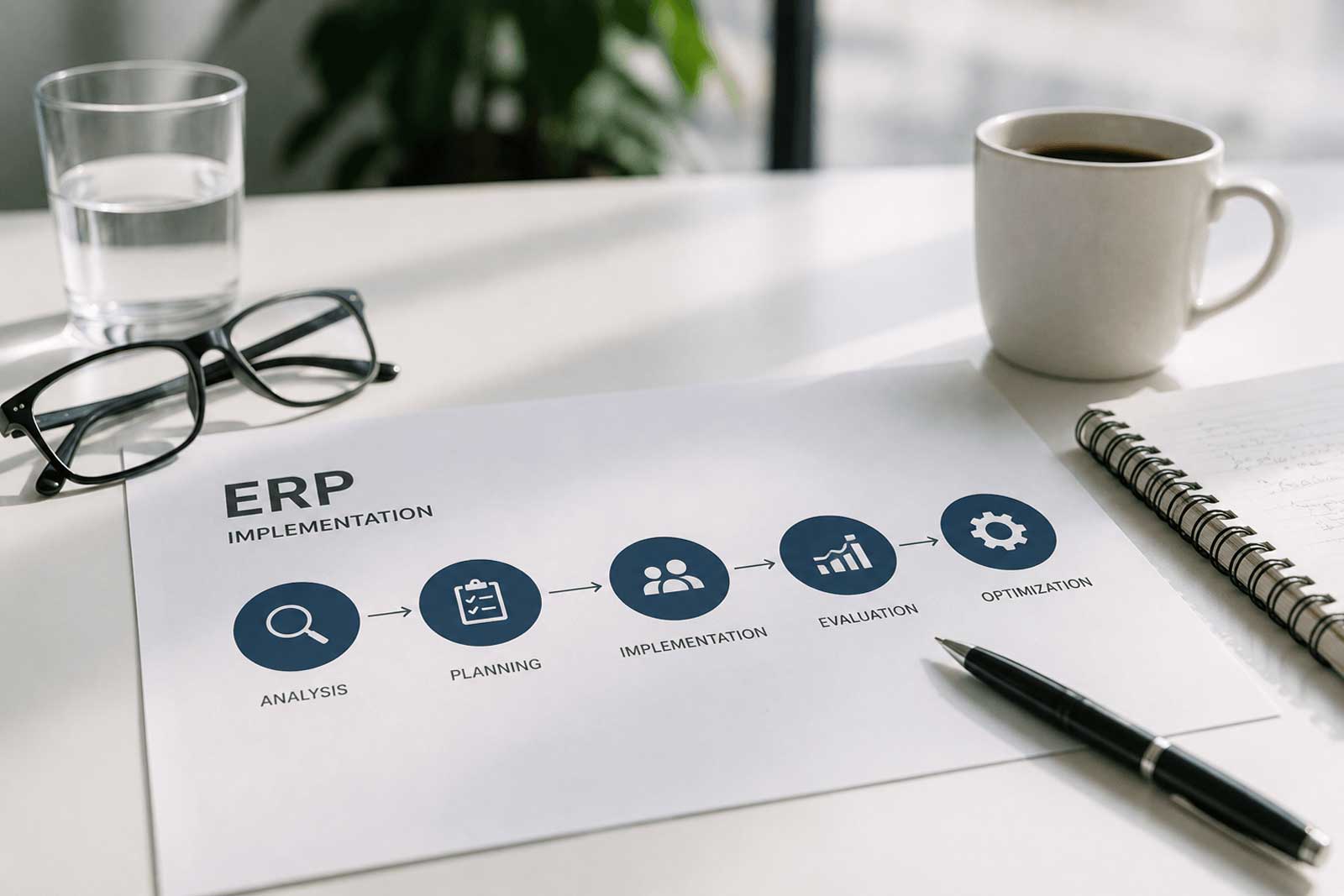
In practice, a two-stage approach often works best: neutral consulting for requirements analysis and pre-selection, followed by an experienced implementation partner for execution. For smaller, standardized projects, a capable partner can cover both roles — provided the selection phase is conducted transparently and with an open outcome.
How Do You Recognize Good ERP Consulting?
Not by the size of the reference list, but by the way of working. Concrete indicators:
- Process before product: Good ERP consulting asks about your workflows, data, and interfaces first — not your preferred system. Anyone who recommends software immediately skips the most important step.
- Transparent total costs: Reputable consultants calculate license, implementation, migration, training, and operations together — not just the attractively priced license fee.
- Honesty about internal effort: Anyone promising the project will run “almost without your involvement” is not credible. Good consulting names the internal workload clearly.
- Prioritization over completeness: It helps sort requirements into must-have, should-have, and nice-to-have, rather than implementing every special request.
- Industry understanding: Experience with comparable business models is more valuable than generic methodological competence.
How Much Internal Effort Does an ERP Project Require?
This point is most frequently underestimated. ERP consulting is guidance, not a handover of responsibility. In many ERP projects, internal effort of around 20–30% of total project working time is realistic — primarily through key users from specialist departments, process decisions, testing, and the maintenance and cleansing of company data.
The reason: nobody understands actual workflows better than the employees who carry them out daily. A consultant can structure processes and configure a system, but cannot decide how your company should work in the future. Projects regularly fail when companies misunderstand consulting as a full-service arrangement and do not free up internal resources.
The Right Selection Criteria and How to Weight Them
System selection often fails because of the wrong method: feature lists get checked off, impressive demos win emotionally. A more reliable approach is a weighted criteria catalog that objectifies the selection. Proven criteria and their typical relevance:
- Functional fit to core processes — highest weighting, as this is where the actual value is created
- Integration capability with existing systems (DMS, CRM, shop, interfaces)
- Scalability for growth, new locations, or entities
- Operating model (cloud vs. on-premise) and the resulting cost structure
- Total cost of ownership over five years rather than pure acquisition costs
- Vendor viability: release cycles, support, market stability
Critically, weightings must be defined before the vendor comparison — otherwise criteria get adjusted retroactively to favor the preferred option.
For many mid-sized companies, cloud-based ERP solutions are attractive because they reduce maintenance overhead, scale faster, and enable regular updates. Microsoft Dynamics 365 Business Central is a frequently chosen solution here, particularly when finance processes, purchasing, warehousing, sales, project management, and adjacent ERP processes need to be mapped in an integrated way. Microsoft Dynamics 365 Business Central
Typical Mistakes in ERP Projects
- System selection before process analysis: The system is chosen before requirements are defined — processes are then adapted to the system, often with unnecessary compromises.
- Underestimated data migration: Poor legacy data simply moves the problem into the new system. Cleansing belongs at the beginning, not the end.
- Scope too large: Attempting to map everything at once prolongs projects and causes momentum to stall.
- Neglected change management: Without involving and training staff, user adoption fails — regardless of technical quality.